
Wind leans on a door most days here, grit works into every bearing, and a norther can drop the temperature in an afternoon. Express Garage Doors tunes doors up around Amarillo so a tired part gets caught on a calm afternoon instead of a frozen morning. The estimate is free and written out before anything beyond the visit.
Tell us what the door is doing. The estimate is free and you can say no.
Fine dust gets everywhere on the high plains, and a garage door is full of places for it to settle. It finds its way into roller bearings, the pivot of every hinge and the bearings at each end of the spring shaft, mixes with whatever lubricant was there, and turns into a paste that grinds the parts from the inside.
A door with grit-worn rollers thumps as the wheels skid instead of turning, and the opener works harder on every trip. During a tune-up each roller is spun by hand, hinges are checked for play at the pivot, and anything that has gone rough is shown to you with the reason it should go.
Open-bearing rollers are the usual culprits. Sealed-bearing rollers close the bearing off from the dust, and once a set goes in, they tend to outlast several of the old kind.
The visit starts with a balance test. The technician disconnects the opener, raises the door by hand and lets go at about halfway. A door that stays there is balanced; one that drifts down or up has springs that no longer suit it, and that mismatch is where a lot of opener and cable trouble begins.
Then comes the full round: springs for rust and spread coils, both cables from drum to bottom bracket, rollers, hinges, struts, the tracks and the bolts that hold them, the opener's force and travel, the photo eyes, and the seals. The moving metal is lubricated with a product that doesn't hold dust the way heavy grease does, and the tracks are wiped clean rather than greased.
On a door with an opener that runs from a keypad or a car button, those are tried too, since a remote that only works right next to the door usually points to a weak battery or the opener's antenna rather than the opener itself.
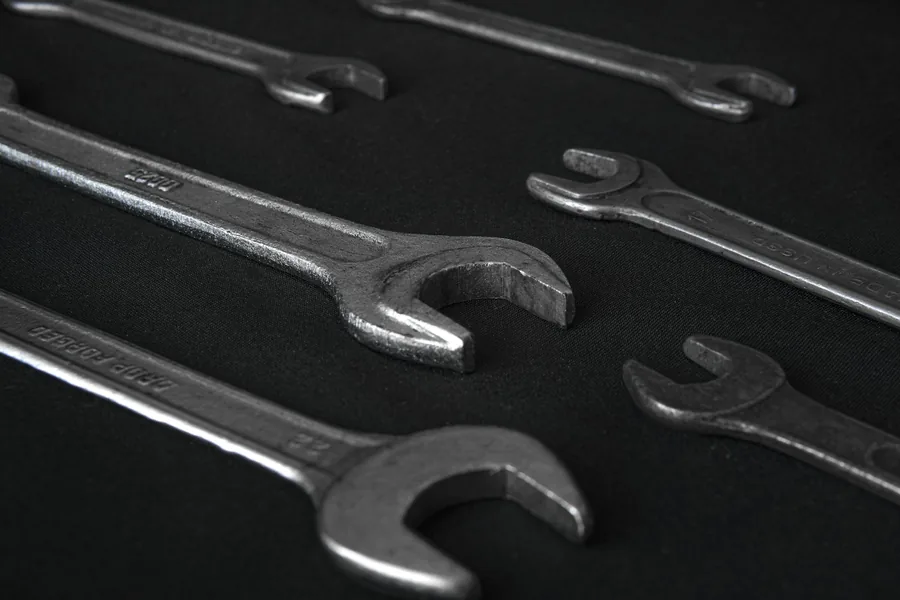
The parts that wear fastest here ride with the technician: sealed-bearing rollers, hinges, bottom seals and the common cables. When a tune-up turns one up worn, it can be changed during the visit as soon as you've seen it and agreed.
Anything larger, like a spring with deep rust or a track section bent by the wind, is written into the estimate with the reason, so you can decide whether to do it now or plan for it.
The same sequence on every door.
Day after day of wind pushing on a wide door loosens the bolts that hold the track to the wall and the hinges at the center of the door, where it flexes most. A door that has started to bow binds worse each windy afternoon until a roller pops out of the track.
A tune-up catches the loosening before that happens. The track fasteners and center hinges are snugged up by the technician, the struts are checked for cracks or loose bolts, and a door that is bowing without a strut is offered one on the estimate.
Two moments make sense for a visit. One is in the fall, before the first hard cold snap, because a spring that is close to the end tends to let go on the first frigid morning. The other is in late spring, once hail season has passed, to catch dented sections, cracked window glass and an opener knocked out of adjustment by a power surge.
The right rhythm for your door depends on how often it runs and how exposed it is. A door facing open ground that cycles several times a day wears faster than a sheltered one, and the technician will say what your door's wear suggests.
A bottom seal that has dried out and split lets grit, tumbleweed debris and cold air straight into the garage, and side seals pulled away from the jambs whistle on a windy night. The seals are looked at along their full length, and a door that no longer meets the floor evenly is checked for the reason before any new seal goes on.
Sometimes the cause is a slab that has shifted, sometimes a cable that has stretched, and sometimes a bottom section bowing in the wind. A new seal only closes the gap for good once the door itself is landing square, so that comes first.
Shop and barn doors are bigger and heavier, often run on high-lift track, and their springs carry a lot more weight. They get the same balance test and the same round of checks, with extra attention to the struts and the top section where the door turns.
Every door on the property can be covered in the same visit, each written up on its own, so you can see which one needs work first. If a door is already off its track, our off-track repair page explains why it should be left where it is until the technician arrives.
A balance test by hand, then springs, cables, rollers, hinges, struts, track, seals and the opener's settings, with the moving metal lubricated and the safety reverse proven.
Grit gets into open roller bearings and grinds them down. Sealed-bearing rollers keep the dust out and last much longer, and a tune-up shows whether yours are going rough.
Before the first hard cold in the fall and again after hail season catch the most. The technician tells you what your door's wear suggests.
No. Tracks full of grease hold grit. The tracks are wiped clean, and the rollers, hinges and bearings get a lubricant that doesn't collect dust the same way.
If the door has no strut, one is offered on the estimate. If it has one, the strut and the track bolts are checked and tightened by the technician.
The bottom or side seals have dried out or pulled away, or the door isn't landing evenly. The cause is found first, then the seals are renewed.
Yes, on the same visit, with each door written up separately.
Yes. Anything beyond the tune-up goes into a free written estimate before any work.
Two hours, not a day, and you'll get a call as the technician sets off. Free throughout Potter County. The estimate is free either way.
Prefer to talk it through? Call (806) 545-9374.
Tell us what the door is doing. The estimate is free and you can say no.